Frequently Asked Questions
Hawaii ADU answers.
How much does an ADU cost in Hawaii?
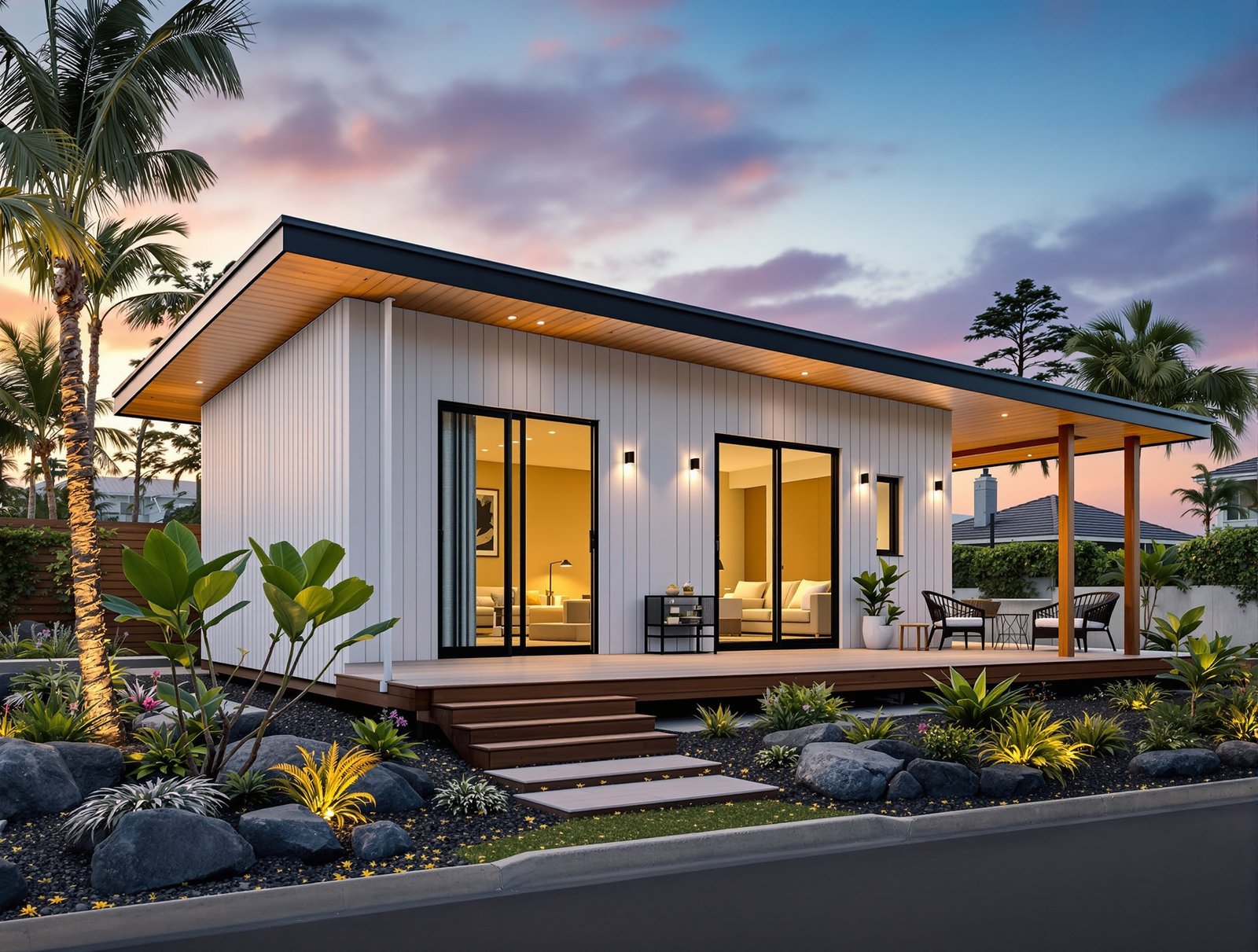
ADU costs in Hawaii range from $110,000 for a basic garage conversion to $650,000 for a large detached new build in the most expensive markets. The most common project — a 600–700 sq ft 1-bedroom detached ADU — falls in the mid-range for your region. Always get three contractor bids before finalizing your budget.
What ADU law applies in Hawaii?
Act 39 of 2024 (SB 3202), signed May 28, 2024 and effective immediately, requires every county to allow at least two ADUs on residentially zoned single-family lots — either through a blanket standard or by designating qualifying districts (such as areas near transit or major arterials). An earlier draft would have barred owner-occupancy mandates statewide, but that provision was stripped before passage, so counties may still impose their own owner-occupancy rules; the enacted law does prohibit counties from restricting an ADU's use as a separately leased long-term rental, though local design and development standards still apply. Counties have until December 31, 2026 to adopt compliant ordinances. Local zoning, building, utility, site, and private-covenant requirements may still apply; verify the current rules for the property before design or construction.
What happens if a Hawaii county misses the December 31, 2026 ADU compliance deadline?
After the deadline, a county that has not adopted a compliant ordinance can no longer deny an ADU permit application solely because it exceeds a local unit cap — the state's two-ADUs-per-lot minimum effectively takes over. The county can still deny an application based on infrastructure capacity or design-standard requirements adopted before the deadline. As of 2026, implementation is uneven across counties, and some (including Maui) have introduced their own bills to bring local code into compliance.
How long does it take to get an ADU permit in Hawaii?
The representative ADU permit-review planning timeline for Hawaii is 8–20 weeks. This is not a statewide deadline or guarantee. Timing can change with the local authority, project complexity, corrections, utilities, site conditions, and application completeness; confirm the current timeline locally.
What is the best ADU type for my Hawaii property?
If your property has a qualifying garage, start there — conversions cost 40–55% less than detached new construction while generating similar rental income in most Hawaii markets. If conversions aren't viable, a detached new build maximizes rental income and property value. An attached ADU is the right choice for smaller lots where a detached structure isn't feasible.
What is the cheapest ADU to build in Hawaii?
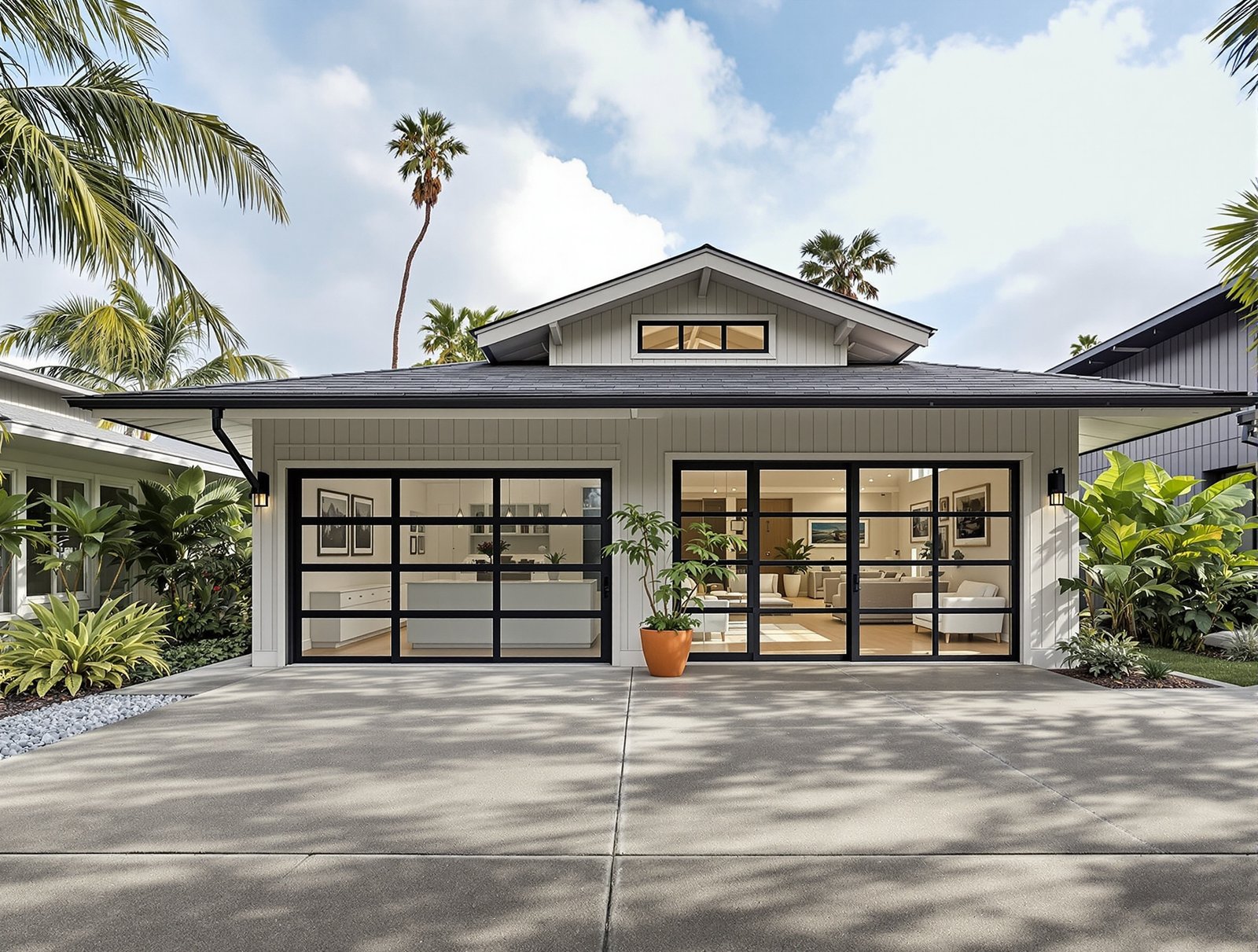
Garage conversions (often built as ohana units) are the least expensive option, typically $110,000–$285,000. Basement conversions are uncommon in Hawaii due to the tropical climate and volcanic soil, so they're not a widely available lower-cost path here the way they are in colder states.
What is the ROI on an ADU in Hawaii?
The adopted Hawaii one-bedroom planning range is $1,475–$1,875 per month, derived from the HUD FY2026 revised FMR market basket under ROI-CM-1.4. Payback is calculated from the homeowner's budget, ADU type, size, rent range, and a 30% operating-expense reserve. Property value uses a 15% national planning input with a 10%–20% uncertainty range; it is not a valuation.