Frequently Asked Questions
Wisconsin ADU answers.
How much does an ADU cost in Wisconsin?
ADU costs in Wisconsin typically range from $80,000 to $150,000 for a modest detached unit, though larger, higher-finish projects can run $150,000–$350,000. Conversions run lower, often $45,000–$100,000.
Is Wisconsin considering a statewide ADU law?
Not any longer this session. NationwideADU's September 16, 2026 review classifies Wisconsin as local control; no statewide ADU siting mandate is in effect. A bipartisan bill, SB 473, would have required every municipality with a zoning ordinance to allow at least one ADU by right on a qualifying single-family parcel, but it failed to pass the Senate on March 23, 2026. City, county, zoning, building, utility, and site rules control. Local zoning, building, utility, site, and private-covenant requirements may still apply; verify the current rules for the property before design or construction.
What happened to Wisconsin's SB 473 ADU bill?
SB 473 had bipartisan sponsorship (15 Republicans and 4 Democrats) and cleared committee in February 2026, but it failed to pass the Senate on March 23, 2026 under Senate Joint Resolution 1, ending action on it for the 2025–2026 session. Had it passed, it would have required municipalities with zoning ordinances to allow at least one ADU by right on qualifying single-family parcels, similar to Iowa's 2025 law.
How long does it take to get an ADU permit in Wisconsin?
The representative ADU permit-review planning timeline for Wisconsin is 4 – 12 weeks. This is not a statewide deadline or guarantee. Timing can change with the local authority, project complexity, corrections, utilities, site conditions, and application completeness; confirm the current timeline locally.
What is the cheapest ADU to build in Wisconsin?
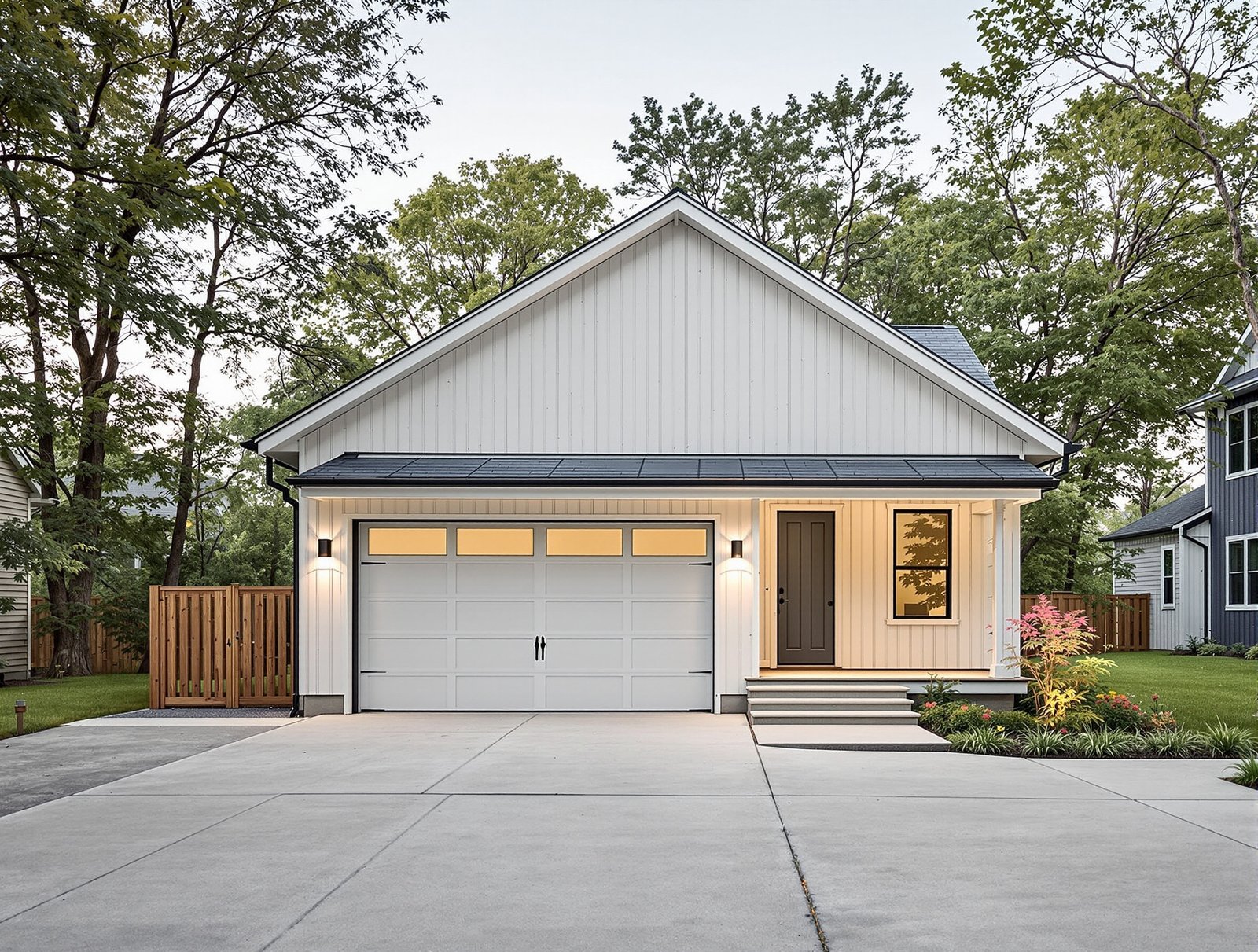
Garage conversions are generally the least expensive option, typically $45,000–$95,000, using an existing structure to significantly cut cost versus new detached construction.
How much are ADU permit fees in Wisconsin?
The representative ADU permit-fee planning range for Wisconsin is $500 – $2,500. This is not an official statewide fee schedule or quote. Plan review, utility, impact, site, and other local charges may be additional; request a current itemized estimate from the permitting authority.
What is the ROI on an ADU in Wisconsin?
The adopted Wisconsin one-bedroom planning range is $850–$1,375 per month, derived from the HUD FY2026 revised FMR market basket under ROI-CM-1.4. Payback is calculated from the homeowner's budget, ADU type, size, rent range, and a 30% operating-expense reserve. Property value uses a 15% national planning input with a 10%–20% uncertainty range; it is not a valuation.